Mobility limitations can significantly impact daily life, independence, and personal confidence. A well-designed wheelchair helps restore freedom of movement while ensuring safety and comfort. Among the many options available, the Aluminum Manual Wheelchair has become one of the most widely used mobility solutions due to its lightweight structure, durability, and ease of handling.
This article explains how aluminum manual wheelchairs function, why aluminum frames provide clear advantages, and how users or caregivers can select the right model based on practical needs. It also outlines key features, performance parameters, and common purchasing considerations to help buyers make informed decisions.
Wheelchairs are essential mobility devices designed to assist individuals who have difficulty walking due to injury, disability, aging, or medical conditions. Manual wheelchairs rely on user propulsion or caregiver assistance rather than motorized systems.
The Aluminum Manual Wheelchair represents a modern evolution of traditional steel wheelchairs. Aluminum alloys provide a high strength-to-weight ratio, allowing manufacturers to design lighter yet strong frames that are easier to maneuver and transport.
For many users, a lighter wheelchair directly improves independence. A wheelchair that is easier to push, lift, fold, and transport makes daily tasks significantly more manageable.
The operating principle of a manual wheelchair is relatively straightforward. Movement is generated either by the user pushing the rear wheels using hand rims or by a caregiver pushing from behind using handles.
The lightweight aluminum frame acts as the structural backbone that supports all other components while maintaining stability during movement. Because aluminum reduces overall weight, less physical force is required to propel the wheelchair.
The key movement process includes:
This simple but efficient mechanism allows users to control speed, direction, and positioning with precision.
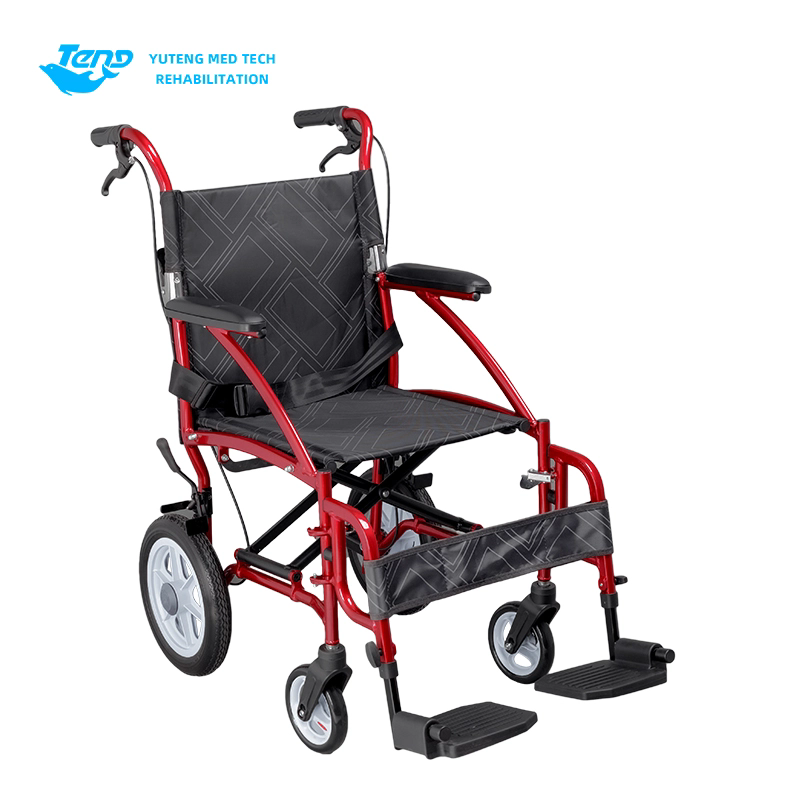
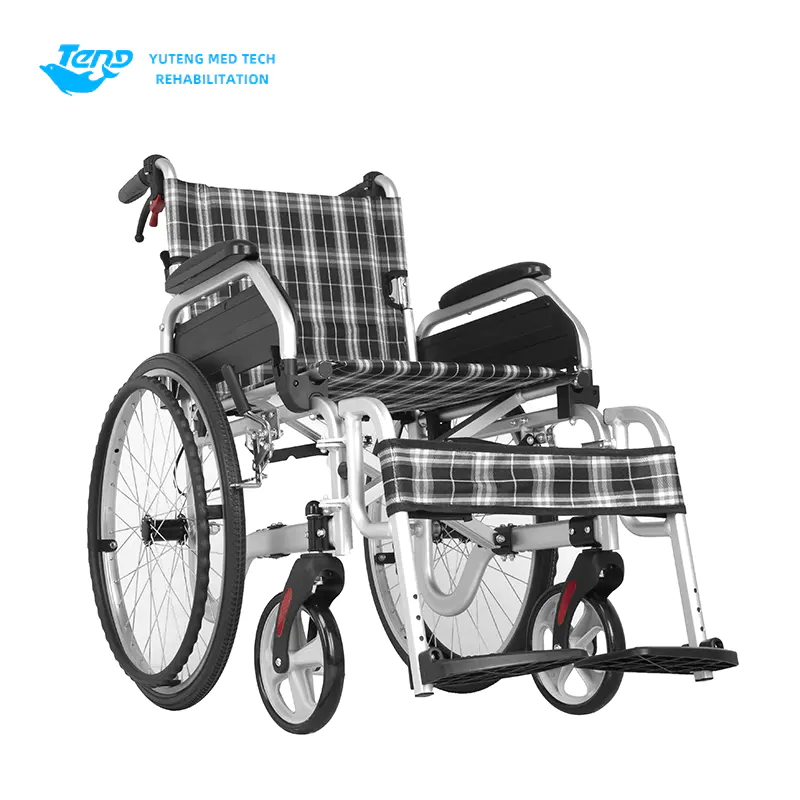
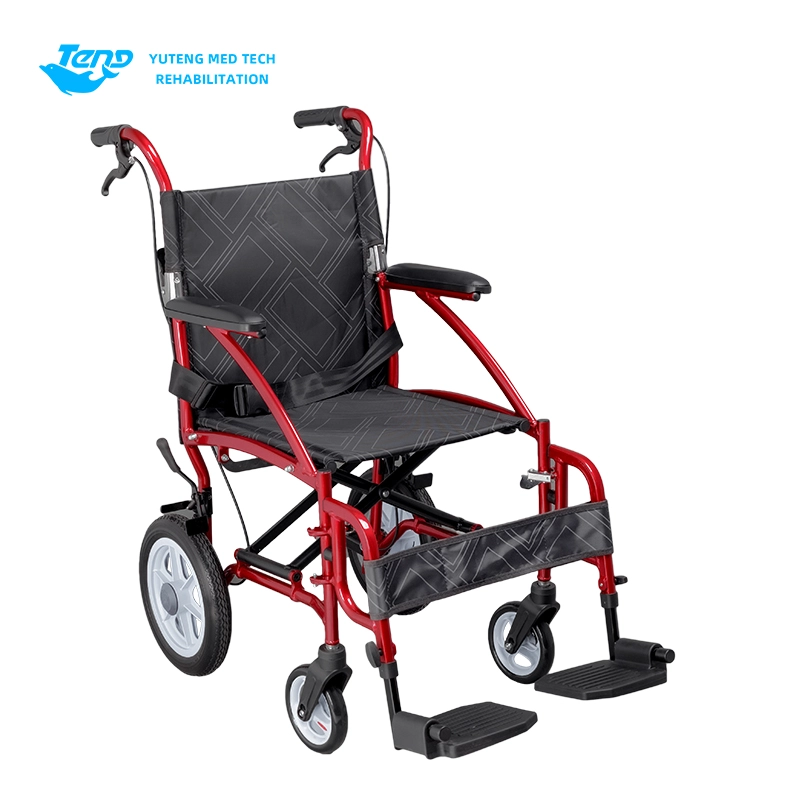
A well-engineered aluminum manual wheelchair integrates multiple components designed for both comfort and performance.
| Component | Function |
| Aluminum Frame | Main support structure providing strength while maintaining lightweight performance |
| Rear Wheels | Large wheels that allow users to propel the wheelchair using hand rims |
| Front Casters | Small rotating wheels that improve maneuverability and turning ability |
| Hand Rims | Circular rims attached to the rear wheels used for manual propulsion |
| Seat and Backrest | Provide user support and comfort during extended use |
| Footrests | Support the user’s legs and maintain proper sitting posture |
| Brake System | Locks wheels in place to prevent unintended movement |
Manufacturers such as Yuteng Medical Technology design these components with ergonomic considerations to improve user comfort and long-term usability.
The popularity of aluminum manual wheelchairs is largely due to their practical advantages compared with traditional steel models.
1. Lightweight Construction
Aluminum significantly reduces wheelchair weight, making it easier for users to push and for caregivers to transport or store the chair.
2. Excellent Corrosion Resistance
Aluminum naturally resists rust and corrosion, allowing the wheelchair to maintain structural integrity even in humid environments.
3. Improved Portability
Most aluminum wheelchairs feature foldable frames, allowing convenient transport in vehicles and compact storage in homes or medical facilities.
4. Durable Structural Strength
Despite being lightweight, aluminum alloys offer high structural strength, ensuring reliable performance during daily use.
5. Smooth Maneuverability
The reduced overall weight allows easier turning, faster acceleration, and better control for users.
While specifications vary by manufacturer and model, most aluminum manual wheelchairs follow similar design standards.
| Parameter | Typical Range |
| Frame Material | High-strength aluminum alloy |
| Net Weight | 10 – 15 kg |
| Seat Width | 16 – 20 inches |
| Load Capacity | 100 – 150 kg |
| Wheel Type | Solid or pneumatic rear wheels |
| Folding Design | Compact cross-brace folding frame |
These parameters help buyers evaluate whether a wheelchair fits specific user needs such as weight capacity, comfort, and portability.
Selecting the correct wheelchair requires careful consideration of user comfort, physical ability, and daily environment.
Consider User Mobility Level
Users with strong upper body strength may prefer lightweight models that allow independent propulsion. Others may require caregiver-assisted designs.
Check Weight and Folding Mechanism
For users who travel frequently or transport the wheelchair by car, a foldable lightweight aluminum frame is essential.
Evaluate Seating Comfort
Seat width, cushion quality, and backrest support directly influence long-term comfort and posture.
Assess Wheel Type
Safety Features
Reliable brakes, anti-tip devices, and stable footrests improve user safety and stability.
Proper maintenance ensures the wheelchair remains safe and reliable over time.
Routine checks not only extend product lifespan but also reduce the risk of mechanical issues during daily mobility.
Q1: Why choose an aluminum wheelchair instead of steel?
Aluminum wheelchairs are significantly lighter while still maintaining strong structural performance. This makes them easier to push, transport, and store.
Q2: Are aluminum manual wheelchairs durable enough for daily use?
Yes. High-quality aluminum alloys provide excellent durability and corrosion resistance, making them suitable for long-term everyday mobility.
Q3: Can aluminum wheelchairs support heavy users?
Many models are designed with reinforced frames capable of supporting 100–150 kg or more depending on the design.
Q4: Are aluminum manual wheelchairs easy to transport?
Most models feature foldable frames that allow convenient storage in vehicle trunks or compact indoor spaces.
The Aluminum Manual Wheelchair offers an ideal balance of lightweight construction, durability, and user comfort. By reducing physical effort while maintaining reliable structural strength, aluminum wheelchairs help users maintain independence and mobility in daily life.
Manufacturers such as Yuteng Medical Technology continue to improve wheelchair design through ergonomic engineering, lightweight materials, and safety-focused features. These advancements ensure that modern wheelchairs meet the diverse needs of patients, caregivers, and healthcare providers.
If you are looking for a reliable mobility solution or want to learn more about aluminum wheelchair options, contact us today to receive detailed product information and professional assistance tailored to your needs.