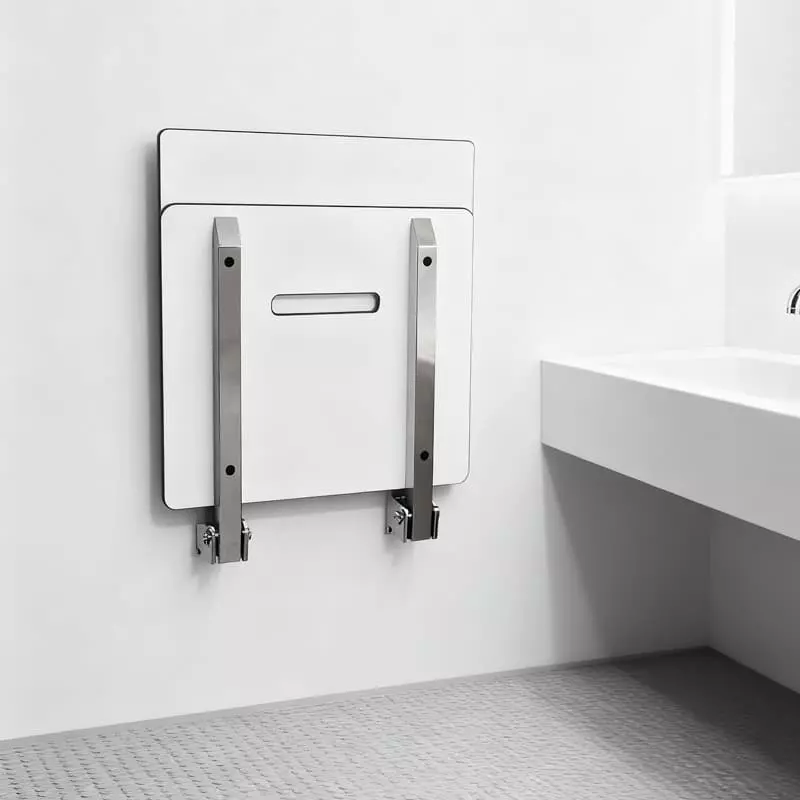
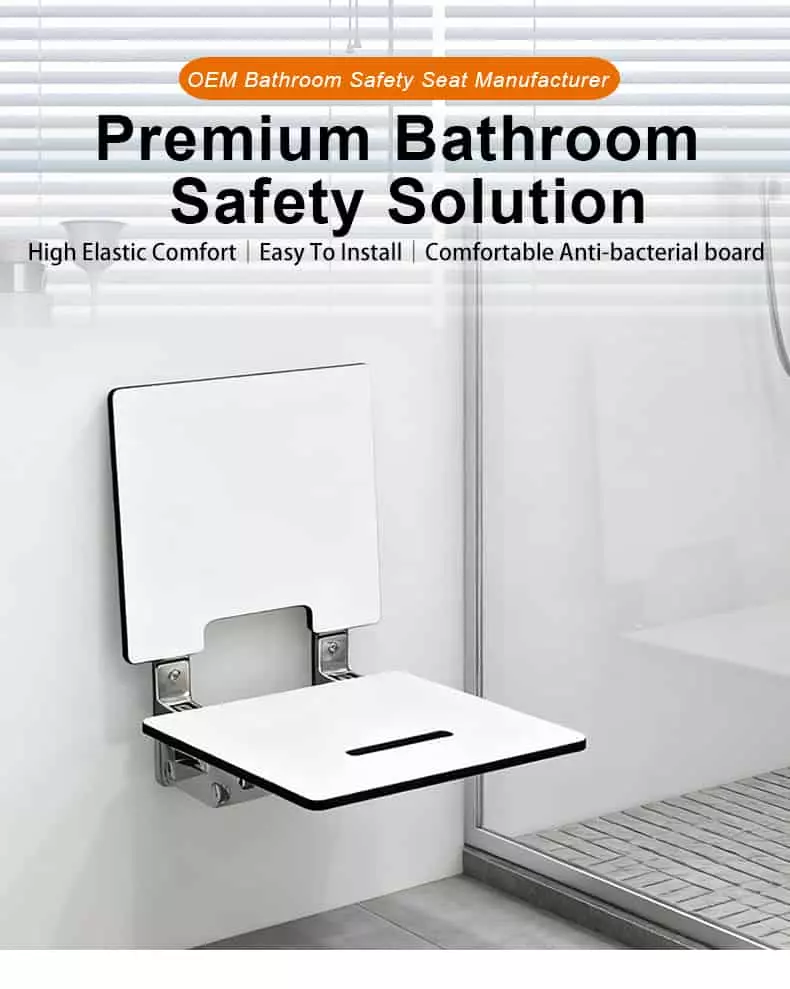
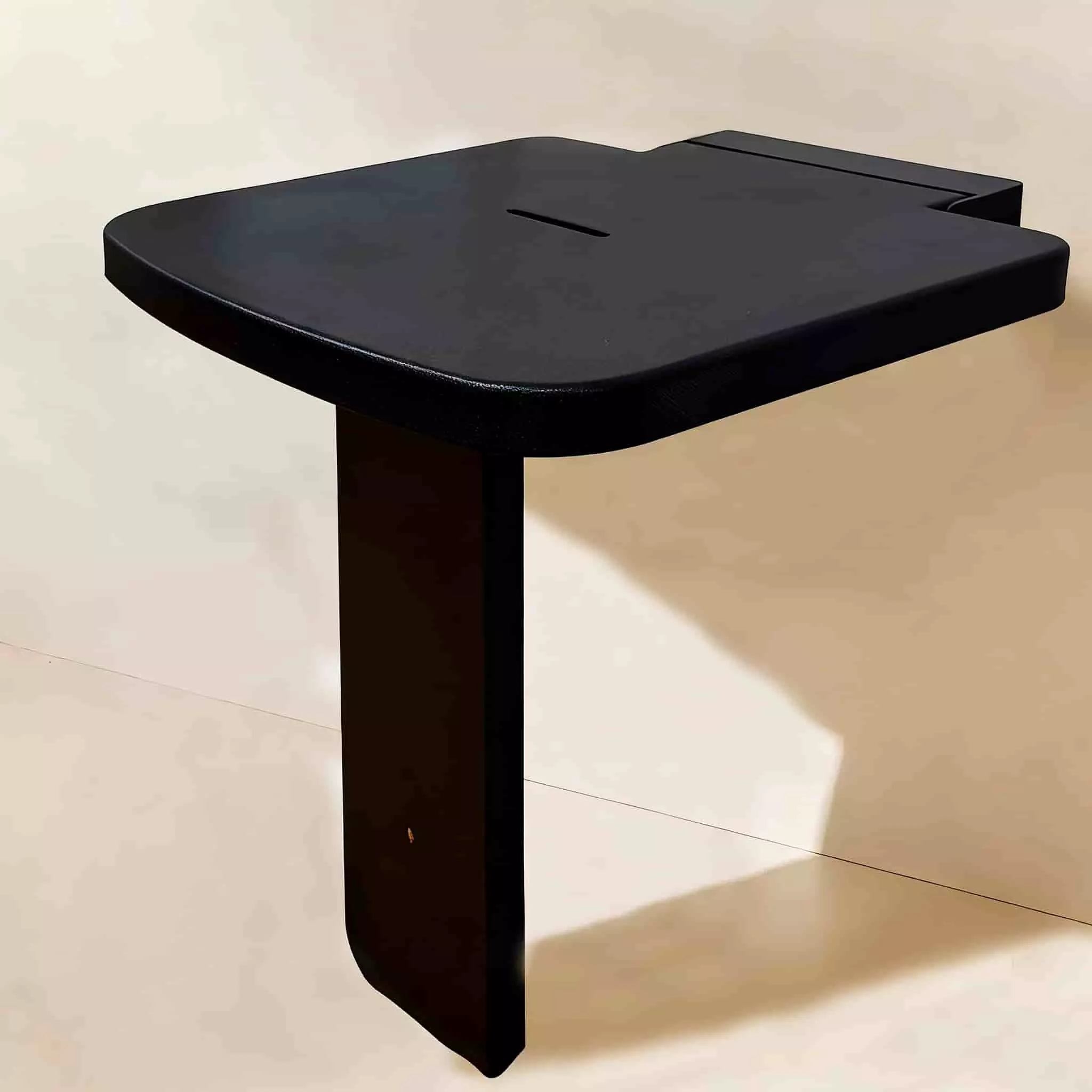
This 304 stainless steel shower bench is a hygienic bathing and transfer seat for hospitals, nursing homes, rehabilitation centres and medical equipment distributors. The frame is 304 stainless steel — the grade hospitals specify because it resists the chlorine-based disinfectants used daily on the ward. The seat is antibacterial compact laminate, a solid-core panel that will not delaminate in wet rooms the way MDF, veneered HPL or painted wood does. Fixed and wall-mounted versions are available, with OEM branding, custom dimensions and hospital-tender packaging.
Two parts decide whether a shower bench survives a wet room: the bracket that carries the load, and the panel the user sits on. On this bench, both are specified for permanent damp.
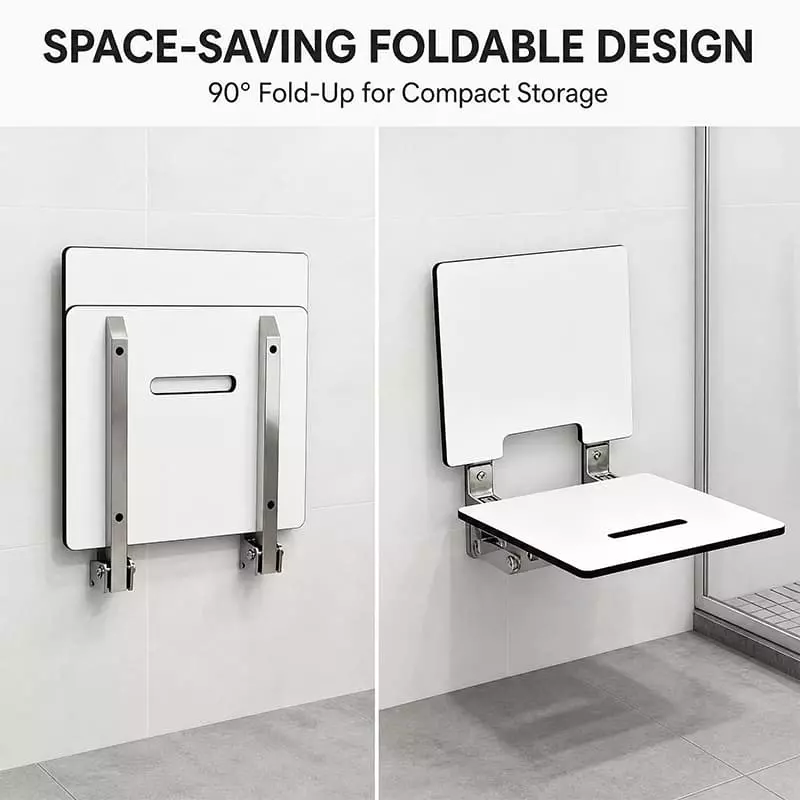
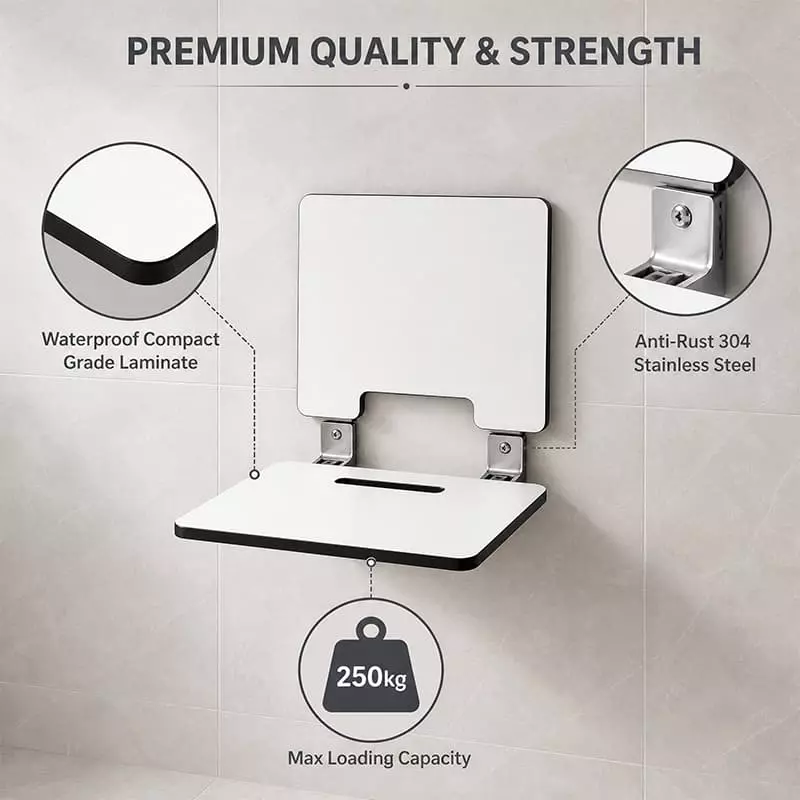
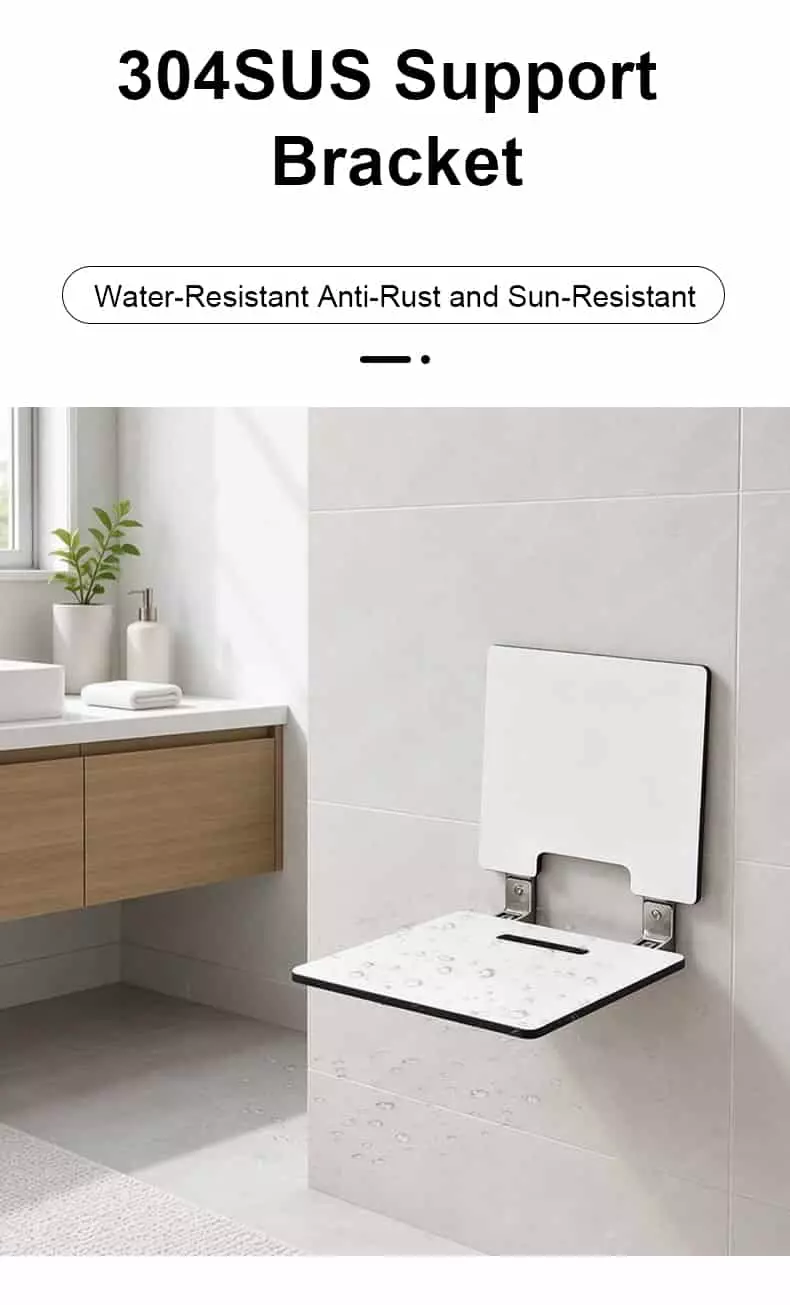
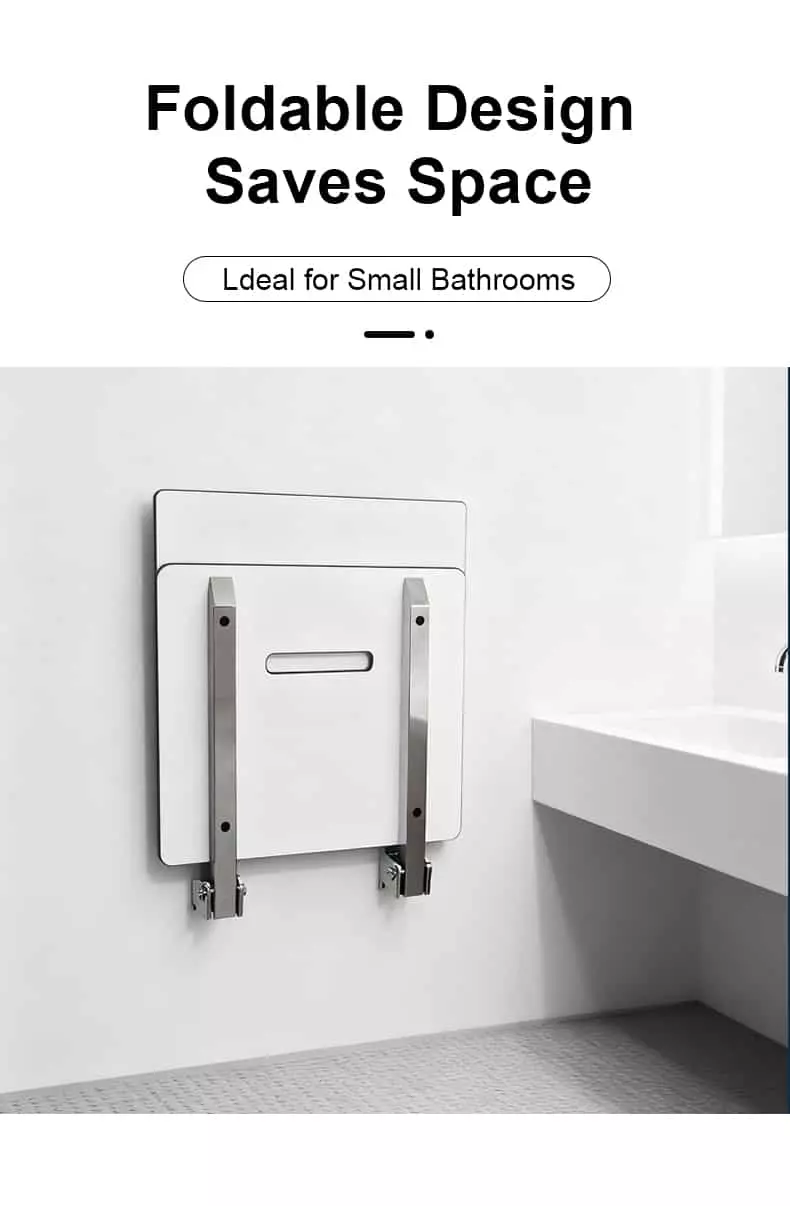
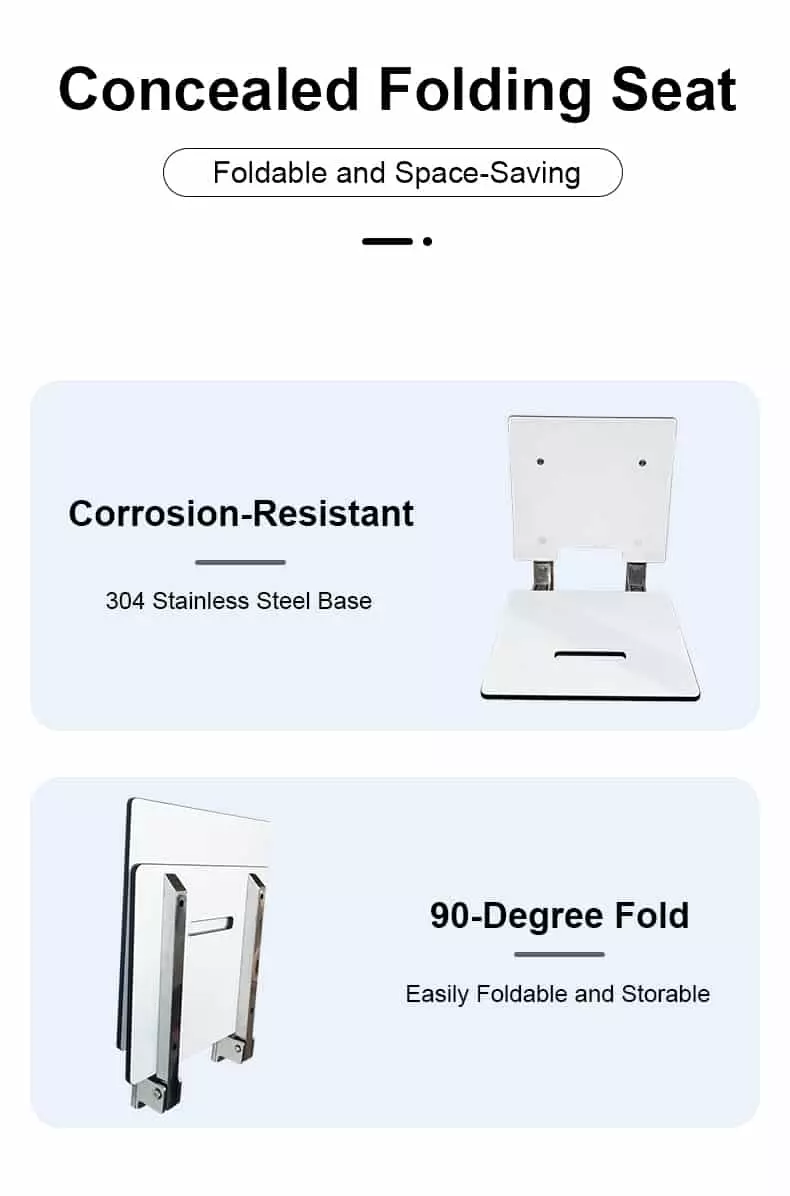
The support bracket is formed from 304 stainless steel and is water-resistant, anti-rust and sun-resistant, so it can also be fitted in shower rooms with windows or prolonged UV exposure. It carries a hinged arm that swings the seat through 90 degrees flat against the wall. The seat panel is antibacterial board — a solid compact laminate, not plywood with a laminate skin — fixed with stainless fasteners. There is no mildew-prone adhesive edge and no unsealed cut face exposed to water. Because every surface in the load path is non-porous, the bench dries within minutes of showering and can be wiped down between patients without waiting.
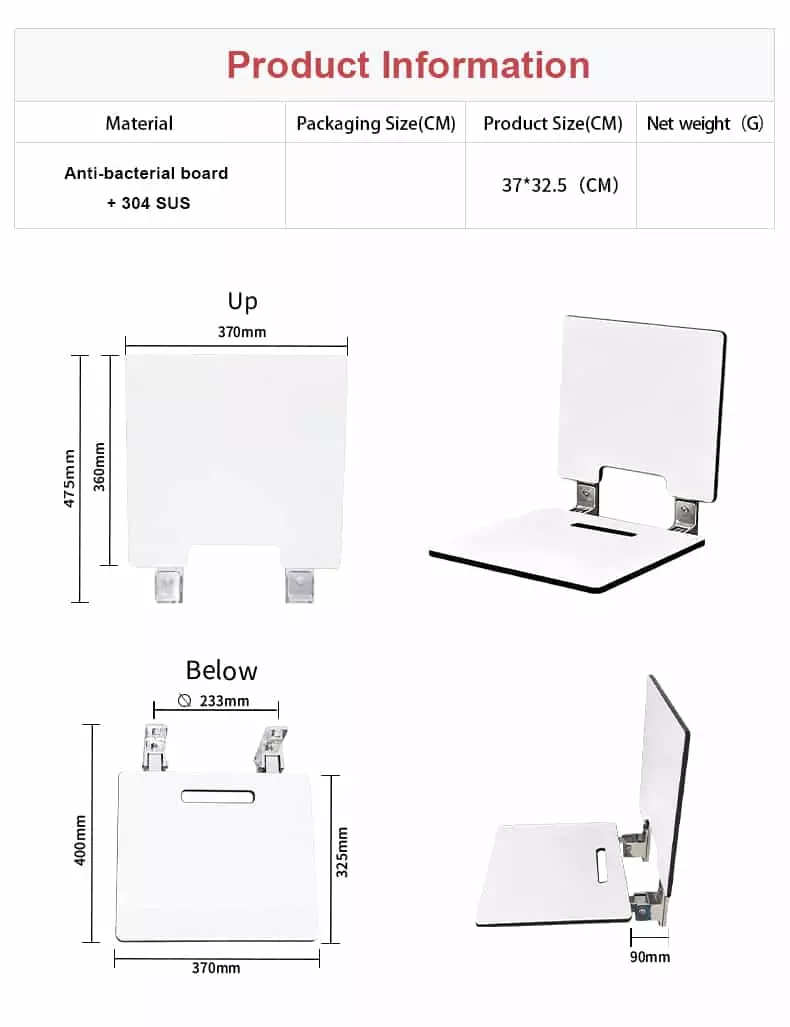
The standard specification is listed below. As a shower bench manufacturer, we can adjust seat width, hole spacing and fold geometry to fit a specific cubicle.
| Item | Specification |
| Model | TO-58 wall-mounted folding shower bench |
| Seat panel | Antibacterial compact laminate, 370 × 325 mm |
| Frame / bracket | 304 stainless steel, satin brushed finish |
| Safe working load | 200 kg (440 lb) |
| Fold | 90° fold to wall, approx. 90 mm folded depth |
| Mounting hole spacing | 233 mm |
| OEM options | Custom seat size, colour, logo, packaging |
When two stainless steel shower bench quotes differ sharply in price, the first thing to check is the grade of the frame. Two grades dominate bathroom hardware: 201 and 304. Visually they are identical on delivery; the difference shows up after a year in chlorinated humidity.
201 saves cost by substituting manganese for nickel. It performs acceptably in dry indoor use, but in a shower room, and especially under daily chlorine-based disinfection, it is prone to pitting corrosion: small rust points that start at surface scratches and cannot be wiped off. 304 carries roughly 8% nickel, which is what gives the alloy its resistance to chloride attack. The same disinfectant that pits a 201 frame leaves a 304 frame unaffected.
We supply both grades on request for price-sensitive projects, but for hospital, nursing home and accessible-bathroom work we quote 304 only, because replacing failed benches after eighteen months costs a facility far more than the grade saving. Buyers comparing a cheap metal shower stool with this bench are usually seeing exactly this difference.
The seat panel is the surface in constant skin contact, and it is where low-cost benches fail first.
Compact laminate is manufactured by impregnating kraft paper layers with phenolic resin and pressing them under heat into one solid board. There is no wooden core to swell and no veneer to peel, which is why it is the standard waterproof panel in commercial washrooms. Water absorption is close to zero, and the black edge on the seat is the resin-saturated core itself, not an applied trim that can detach.
For facilities, two properties matter more than appearance. The surface tolerates alcohol, hypochlorite and quaternary ammonium disinfectants without staining or dulling, so it survives the same cleaning cycle as the rest of the ward. And the board contains an antibacterial agent that slows bacterial growth between cleanings — a real margin on a surface that stays wet for hours a day. Buyers evaluating a waterproof shower stool or bench should ask what happens to the seat edge after two years of daily wetting. On plastic seats the answer is cracked weld lines; on veneered wood it is delamination. On compact laminate there is no failure mode to point to.
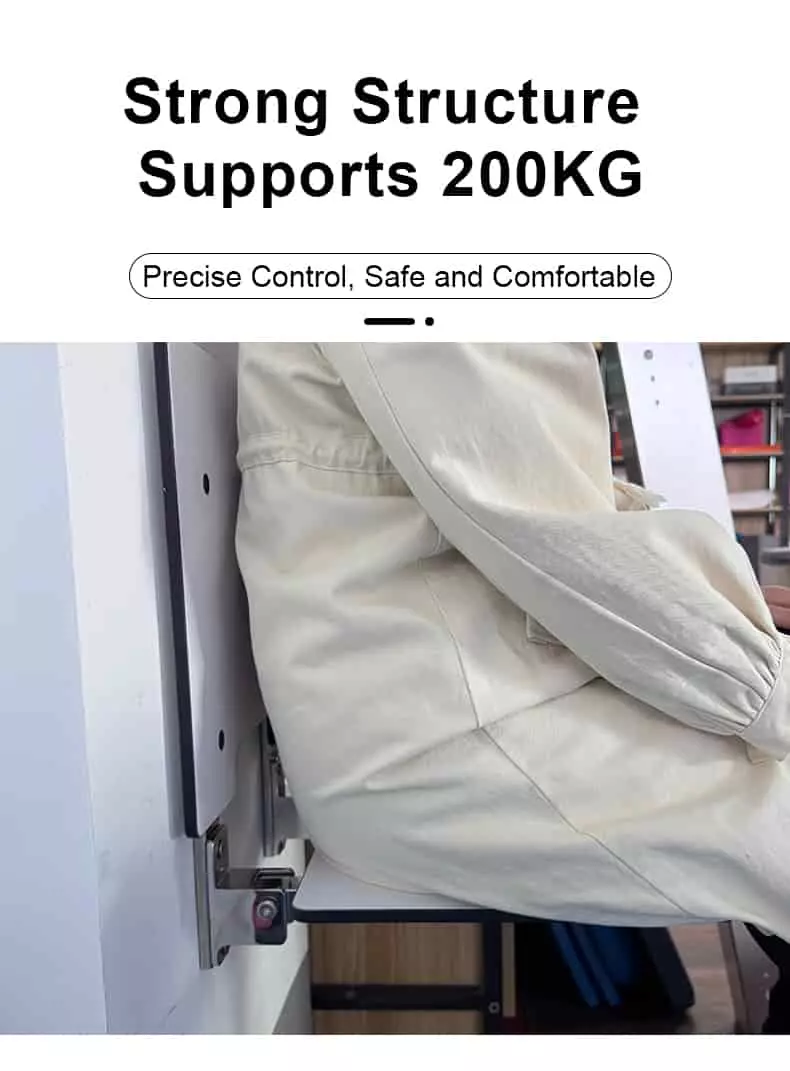
The structure is load-rated at 200 kg (440 lb) — enough for bariatric use in most rehabilitation settings — with the rating carried by the welded bracket arm, not by the fasteners alone. The wall anchors specified in the manual are part of the rating, so anchoring into the recommended wall material matters as much as the bench itself.
In use, the seat sits 360 mm off the wall. Folded up, the stainless steel shower bench stands about 90 mm proud of the tiles, which is what makes the wall-mounted format the usual choice over a free-standing small shower stool in compact bathrooms and wet rooms: standing users keep the full floor, and the bench appears only when needed. Mounting height is set at installation; 430–480 mm covers the range used in elderly-care and accessible-bathroom standards.
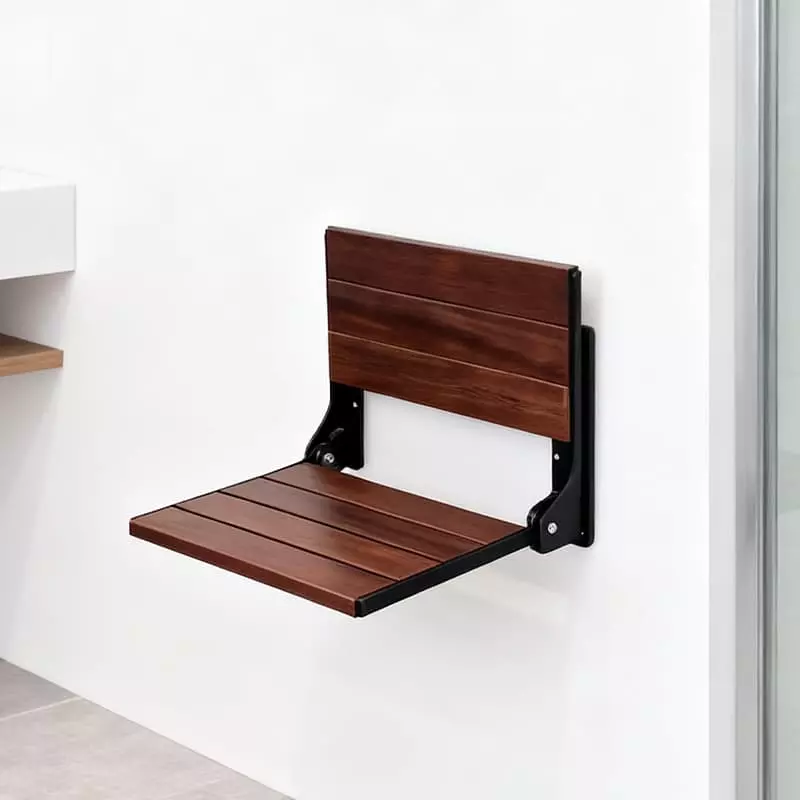
Versions available from the factory: the standard wall-mounted folding model shown here, a concealed-folding version that hides the mechanism behind the finished wall, a fixed non-folding wall bench, and leg-supported variants for partition walls that cannot carry load.
Installation is a two-anchor job. The bracket fixes to the wall on a 233 mm hole spacing with M8 expansion bolts, into concrete, brick or block. On tiled walls, drill through the tile at low speed with a masonry bit behind it; on stud partition walls, fix into a backing plate or order the leg-supported version instead, because the load rating assumes solid anchorage. A drilling template ships with every order.
Day-to-day cleaning needs nothing special. A soft cloth and neutral detergent handle daily wiping, and the 304 frame tolerates chlorine-based disinfectants at ward dilution. The compact laminate seat takes alcohol and hypochlorite wiping without staining. Two things to avoid: hydrochloric-acid descalers, which attack the passive film on stainless steel, and steel wool or abrasive pads, which scratch the surface and give corrosion a place to start. The hinge needs no scheduled maintenance; a silicone spray every six months keeps the fold smooth.
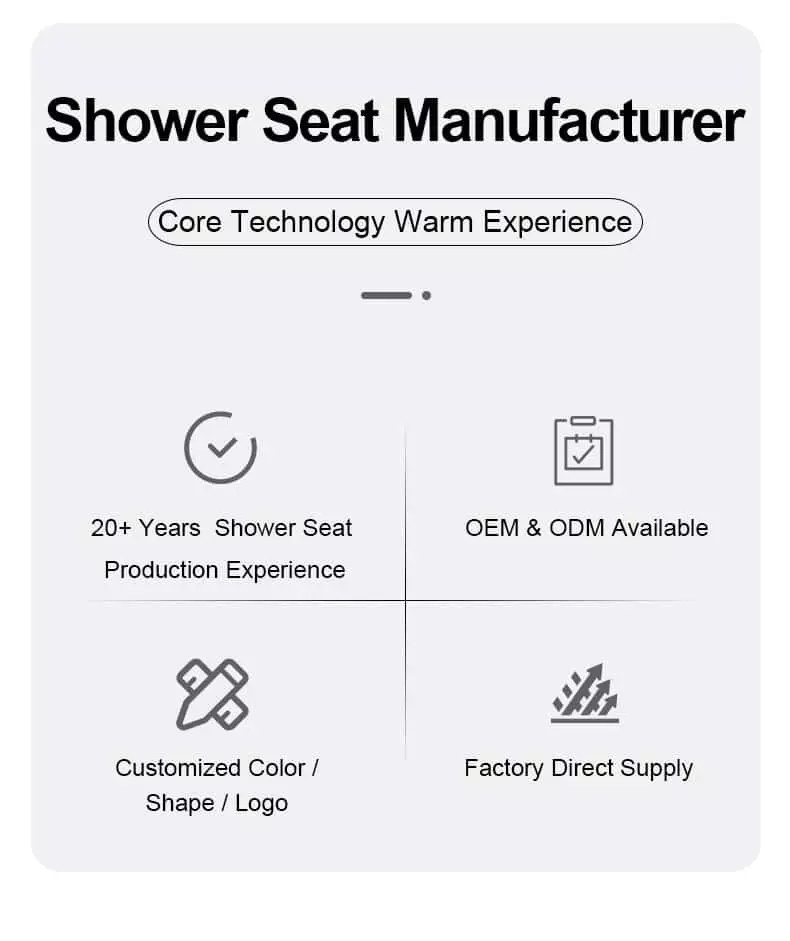
Yuteng Medical has manufactured bathroom safety and rehabilitation equipment in Foshan, China since 1998, with more than two decades of shower seat production behind this product line and export experience covering over 90 countries. The bench is CE and ISO certified, and SGS or TÜV test reports are available on request for tender files.
Commercial terms for wholesale buyers: the minimum order is 5 pieces on the standard model. OEM and ODM projects — laser-cut logo on the bracket, printed branding on the seat, custom colours, custom seat shapes and retail-ready packaging with your barcode — are quoted per project, and stock samples can be supplied for evaluation before a bulk commitment. Standard packing is an export carton with corner protection. Lead time depends on quantity and the level of customization and is confirmed at quotation; because you are buying direct from the manufacturer rather than through a supplier or trading company, repeat orders can usually be slotted into current production, which is worth asking about when a tender deadline is close.
200 kg (440 lb), rated on the complete assembly — bracket, hinge, panel and the specified wall anchors. The rating applies to a static seated load; for dynamic transfer use with heavy patients, anchoring into solid wall material matters as much as the bench itself.
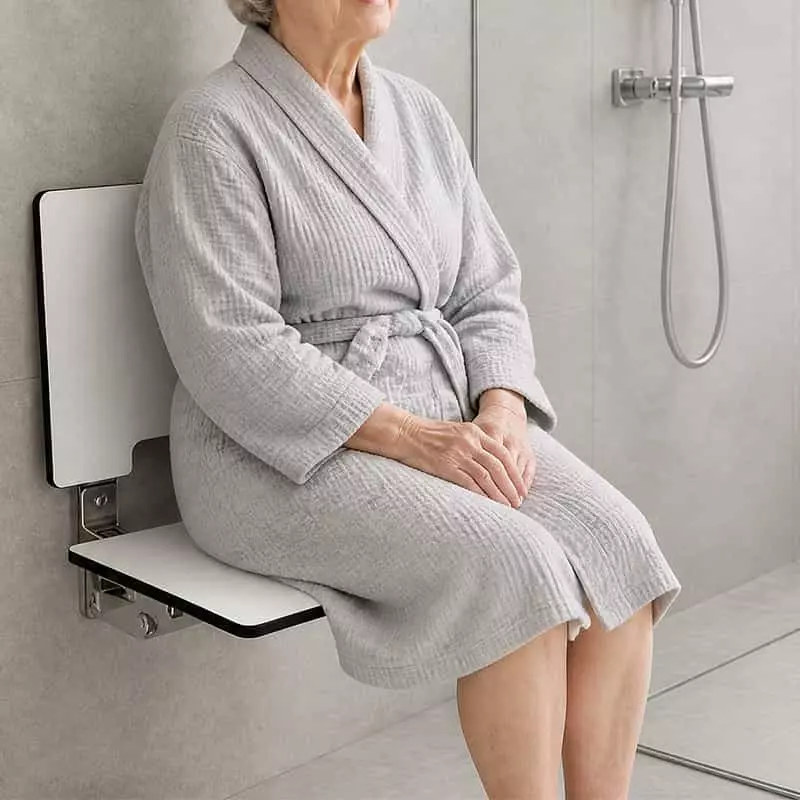
Yes. It is designed around the elderly-care setting: a seat height set at installation for safe sitting and standing, a fold that clears the floor for walking users, and a seat surface that does not slip when wet. The qualities to look for in the best stainless steel shower bench for elderly care — solid anchorage, adjustable mounting height and a non-slip wet seat — are exactly what this model is built on.
The 304 frame resists the chlorides in shower water and in chlorine-based disinfectants. The compact laminate seat cannot rust and will not delaminate, because the panel is a solid resin-impregnated core with no wooden centre. Rust that appears on cheaper benches usually comes from a 201-grade frame, which is the difference explained above.
Yes, as a custom option. The standard model is a backless bench for transfer-friendly access from both sides; a with-back version or an armrest configuration is quoted on request, as is a custom seat size for non-standard cubicles.
The minimum order is 5 pieces for the standard configuration. Stock samples are available for quality evaluation before you commit to volume; sample terms are confirmed at quotation.
Yes. As a shower chair manufacturer selling factory-direct, we serve medical institutions, distributors, trading companies and government projects worldwide, with OEM branding, custom packaging and full documentation for tender submissions. Send your quantity and destination market and we will reply with a formal quotation.
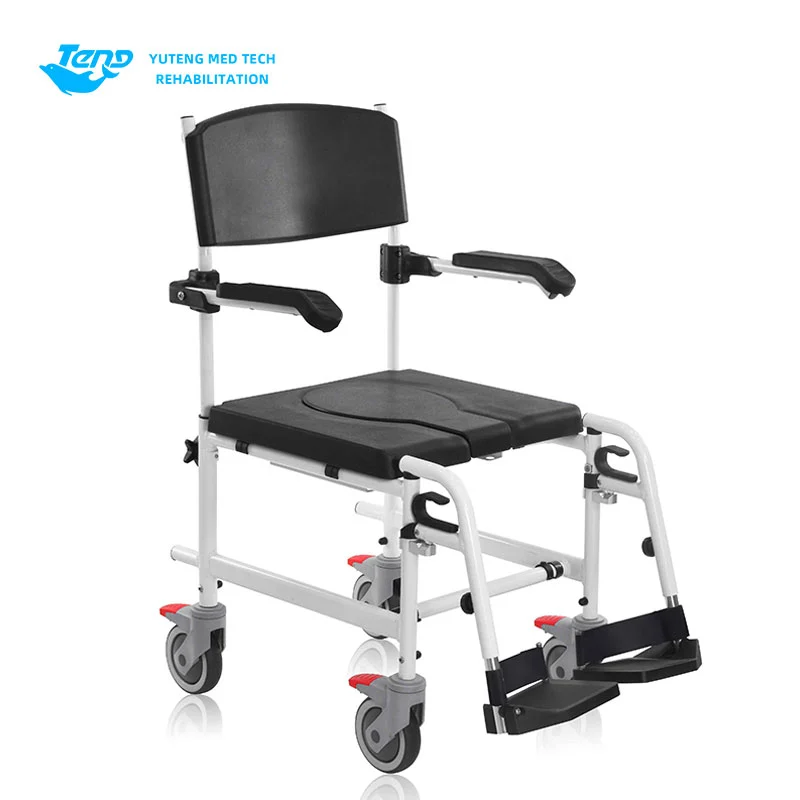
Request a quote with your quantity, destination market and any customization requirements, and the factory shower seat team will reply with pricing, drawings and packing details. Related products: 304 stainless steel shower chair (freestanding), shower chair with wheels, small shower stool.
Address
Chengliu East Road, Gaoming District, Foshan City, Guangdong Province, China
Tel