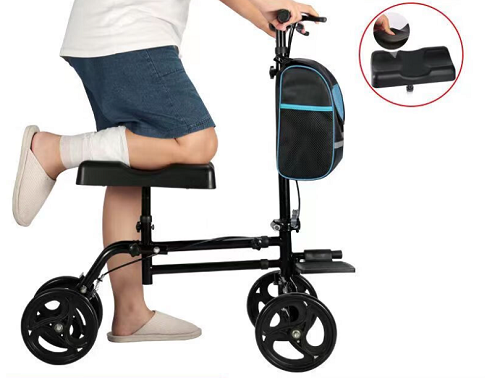
Using a knee training walker effectively is essential for your recovery and mobility after knee surgery or injury. Here's a comprehensive guide to help you master this useful mobility aid:

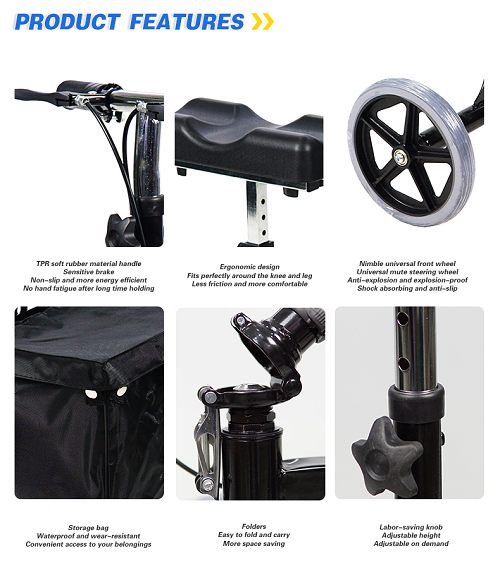
Before using your knee training walker, you'll need to adjust it to your height. Stand up straight (with assistance if needed) and position the walker in front of you. The knee platform should be at a height where your injured leg can rest comfortably with your hip level. The handlebars should allow you to stand with a slight bend in your elbows—not too high or too low. Most models have push buttons or knobs to adjust various components.
Does the height feel comfortable? If you're straining your back or shoulders, you likely need to make further adjustments!
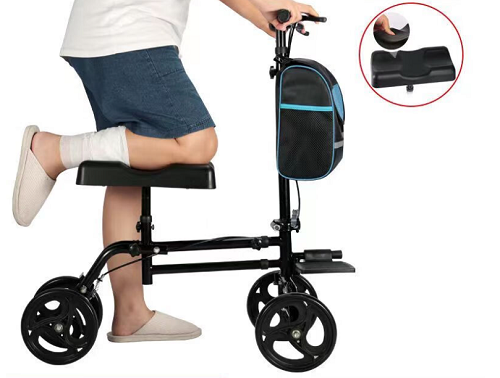
Place your injured leg on the padded knee platform. Your knee should rest comfortably in the centre of the pad with your lower leg and foot hanging behind the platform. Make sure your toes are pointing downward in a relaxed position. The padding should provide adequate cushioning so there's no pressure on your injury or surgical site.
Grip the handlebars firmly. Your hands should rest comfortably on the grips with your wrists in a neutral position. If your walker has adjustable handlebars, position them at a width that feels natural for your shoulders.
Familiarise yourself with the braking system on your knee walker. Most models have hand brakes similar to those on bicycles. Practice engaging and releasing the brakes whilst stationary:
· To slow down: Gently squeeze the brake levers
· To stop: Squeeze the brake levers firmly
· To lock the brakes (for getting on/off): Squeeze the brake levers and press down on the lock mechanism
Can you engage and release the brakes easily? Practice until this movement becomes second nature!
Getting on your knee walker safely is crucial to prevent falls or further injury:
1. Position the walker on a flat, stable surface
2. Lock the brakes to ensure the walker won't move
3. Stand next to the walker on your uninjured leg, using a stable support (wall, railing, or furniture) with your other hand if needed
4. Carefully place your injured leg on the knee platform
5. Grip the handlebars with both hands once your injured leg is secured

Once you're securely positioned on the walker:
1. Release the brake locks
2. Push forward with your good foot, similar to riding a scooter
3. Keep your movements smooth and controlled
4. Look ahead, not down at your feet
5. Maintain good posture with your back straight
How does it feel? Are you able to move forward smoothly? Take your time getting used to the motion!
Turning requires practice and careful movement:
1. Make wide, gradual turns rather than sharp ones
2. Guide the walker in the direction you want to go by gently steering the handlebars
3. Slow down when approaching turns
4. Be mindful of your surroundings and potential obstacles
Practice turning in both directions in an open space before navigating tighter areas.
You'll encounter various surfaces during recovery:
· Smooth floors: Easiest to navigate; maintain steady, controlled movements
· Carpets: Require more effort to push through; maintain momentum without rushing
· Thresholds: Approach straight-on, not at an angle; lift slightly if needed
· Slight inclines: Approach slowly, use brakes to control descent
· Outdoor surfaces: Use caution on uneven terrain; avoid gravel or grass if possible
What surfaces do you need to navigate daily? Practice on each one gradually!
When you've reached your destination:
1. Come to a complete stop
2. Lock the brakes
3. Hold onto a stable surface with one hand if available
4. Carefully remove your injured leg from the platform
5. Find your balance on your good leg before fully releasing the walker
For narrow doorways or tight corners:
1. Approach slowly and assess if the walker will fit
2. Try entering at a slight angle if the space is very narrow
3. Consider whether you need to use an alternative mobility aid for very tight spaces
4. Don't force the walker through spaces that are too narrow
Regular Maintenance. Check all nuts, bolts, and the knee pad regularly. Ensure wheels roll smoothly and brakes work properly. If you notice any issues, address them immediately for your safety.
Build Stamina Gradually. When you first start using your knee walker, you might tire quickly. Begin with short distances and gradually increase as you build confidence and strength.
Keep it Clean. Wipe down the knee pad regularly with an antibacterial wipe, especially if your wound is still healing. Clean the wheels periodically to remove debris that might affect mobility.

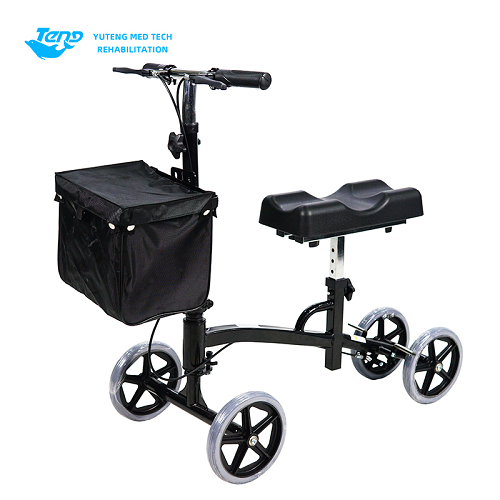
Consider Accessories. Many users find that a basket attachment is invaluable for carrying items while keeping hands free for the walker. A knee pad cover can also provide extra comfort during extended use.
Practice Makes Perfect. The more you use your knee walker, the more comfortable and confident you'll become. Don't get discouraged if it feels awkward at first—your proficiency will improve with practice!
Mind the Weather. Be extra cautious when using your knee walker outdoors in wet conditions. Wheels can slip on wet surfaces, so consider postponing outings in heavy rain or snow.
Plan Your Route. Before heading out, think about potential obstacles like steps, curbs, or uneven surfaces. Planning ahead helps you avoid situations where your knee walker might not be suitable.
Have you considered which routes in your home or community might be challenging? Taking a moment to plan can save you considerable difficulty!
If you experience any of the following, consult your healthcare provider:
· Increased pain in your injured leg while using the walker
· Discomfort in your good leg, back, or shoulders that doesn't improve with adjustment
· Difficulty maintaining balance despite practice
· Any falls or near-falls whilst using the walker
Using a knee training walker effectively takes some practice, but it's a brilliant tool that can significantly enhance your mobility and independence during recovery. By following these guidelines and practicing regularly, you'll soon be navigating your daily activities with confidence and comfort.
Remember, recovery is a journey—be patient with yourself and celebrate your progress!
Do you have any specific questions about using your knee walker in particular environments or situations? Your healthcare provider can offer personalised advice for your unique circumstances.